

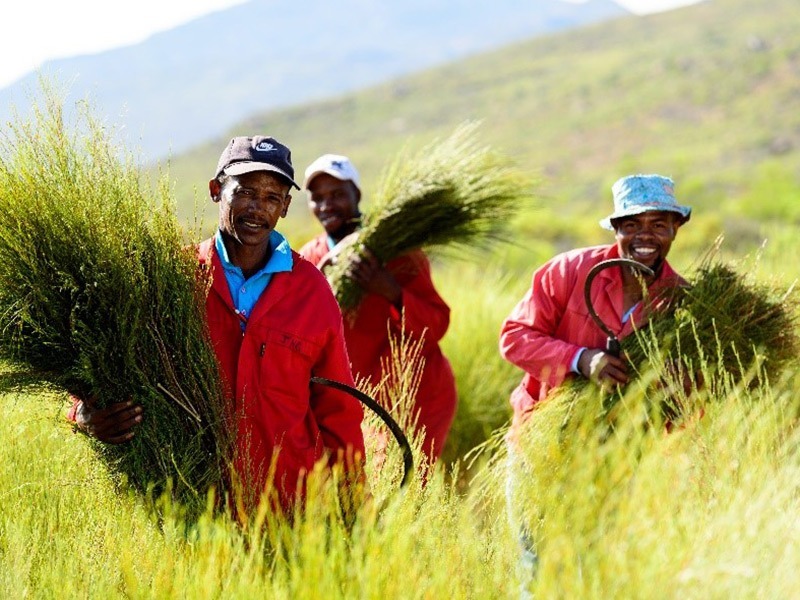
Five months into the current Rooibos season, the market is tighter than expected — not catastrophically short, but noticeably constrained. Farm gate prices have risen, planting failures from prior seasons continue to limit new supply, and international buyers are increasingly demanding consistency over spot availability. Khoisan Tea’s Dr. Tobias Gress explains why long-term supply programmes are now essential, especially for Organic, Fairtrade, and Rainforest Alliance certified Rooibos.
Where the Rooibos market stands right now
Five months into the current Rooibos season, the market picture has become clearer than many producers, exporters, and buyers initially expected. While fears of extreme shortages and dramatic price spikes have not fully materialised, the market remains noticeably tighter than in more comfortable supply years.
Farm gate prices for many Rooibos grades have increased, while processors and exporters continue to face ongoing production and logistics cost pressure.
Why new supply cannot simply be switched on
One of the underlying challenges is the long-term impact of difficult planting conditions over recent seasons. In several growing areas, new plantations established last year struggled due to environmental and weather pressure, with some farmers experiencing poor establishment rates or complete planting losses.
Unlike many agricultural crops, Rooibos production cannot simply be increased within a single season. New plantations require time before becoming commercially productive, meaning planting failures can influence market availability for several years.
“In more than 15 years in the Rooibos industry, I have seen everything from significant oversupply to seasons where available volumes were far below market demand. What many people outside the industry do not realise is that South Africa itself still consumes a substantial share of the annual Rooibos harvest, which naturally adds pressure during tighter supply years.”
— Dr. Tobias Gress, Khoisan Tea
The shift toward earlier contracting and structured supply
The international market has increasingly shifted toward earlier contracting and more structured supply planning. Many processors and exporters are carrying less speculative stock and focusing more on controlled inventory management and long-term customer programmes.
This is especially relevant in Organic Rooibos, Fairtrade certified Rooibos, and Rainforest Alliance certified programmes, where buyers depend not only on supply availability, but also on consistency in cut, colour, taste profile, and filling behaviour across multiple shipments.
“Many buyers are not simply looking for available tea. They require consistency throughout entire annual programmes, particularly in high-speed tea bag production where even small variations can influence filling performance and cup profile consistency.”
— Dr. Tobias Gress, Khoisan Tea
Spot buying vs long-term call-off programmes
Spot buying can still work for smaller or more flexible requirements. However, larger call-off programmes allow processors to reserve specific raw tea lots and blending components for customers over extended periods. This significantly improves continuity and programme stability throughout the season.
Organic Rooibos programmes carry additional complexity, as growers have fewer intervention options during difficult climate or planting periods. Long-term consistency in Organic Rooibos therefore requires even more careful raw material planning and stock management.
Khoisan Tea’s approach: relationships, realism, and transparency
At Khoisan Tea, the focus remains on maintaining close relationships with farmers, realistic production planning, and transparent communication with international customers throughout the season.
“The most stable Rooibos programmes are usually built on realistic planning and long-term relationships. That allows both suppliers and customers to manage quality, continuity, and expectations far more effectively over time.”
— Dr. Tobias Gress, Khoisan Tea
Understanding where the Rooibos market stands today is only part of the picture. The supply dynamics playing out this season are closely connected to the structural trends identified earlier in the year — from harvest volume projections to the increasing pressure on certified programme availability.
If you are planning your Rooibos requirements for the remainder of 2026 or looking ahead to the next season, getting in touch with Khoisan Tea early gives you the best chance of securing the right volumes, grades, and certifications for your programme.
Further reading: For the broader context behind this season’s supply picture, see our earlier outlook — Rooibos Supply Outlook 2026.
Frequently asked questions
1. Is there a Rooibos shortage this season?
Not a full shortage, but supply is noticeably tighter than in comfortable supply years. Farm gate prices have increased and the market is under pressure, but the extreme shortages some feared have not fully materialised.
2. Why can’t Rooibos supply be increased quickly?
Rooibos is a slow-cycle crop. New plantations require several years before they become commercially productive, so planting failures from one season can affect supply availability for years afterwards. Weather and environmental challenges in recent seasons have compounded this issue.
3. What is a Rooibos call-off programme and why does it matter?
A call-off programme allows buyers to reserve specific lots of raw Rooibos tea in advance, drawing down stock over an agreed period. This gives buyers greater certainty on supply, consistent quality, and stable pricing — critical for high-volume tea bag production where consistency is essential.
4. Are Organic and Fairtrade Rooibos harder to source?
Yes. Certified programmes like Organic, Fairtrade, and Rainforest Alliance add sourcing complexity, as growers have fewer intervention tools during difficult growing conditions. Buyers of certified Rooibos are encouraged to plan their programmes well in advance and work closely with trusted processors.
5. How does South African domestic demand affect global Rooibos supply?